Fresh Tree and Shrub Planting Sets the Stage for a Stunning Pond Feature
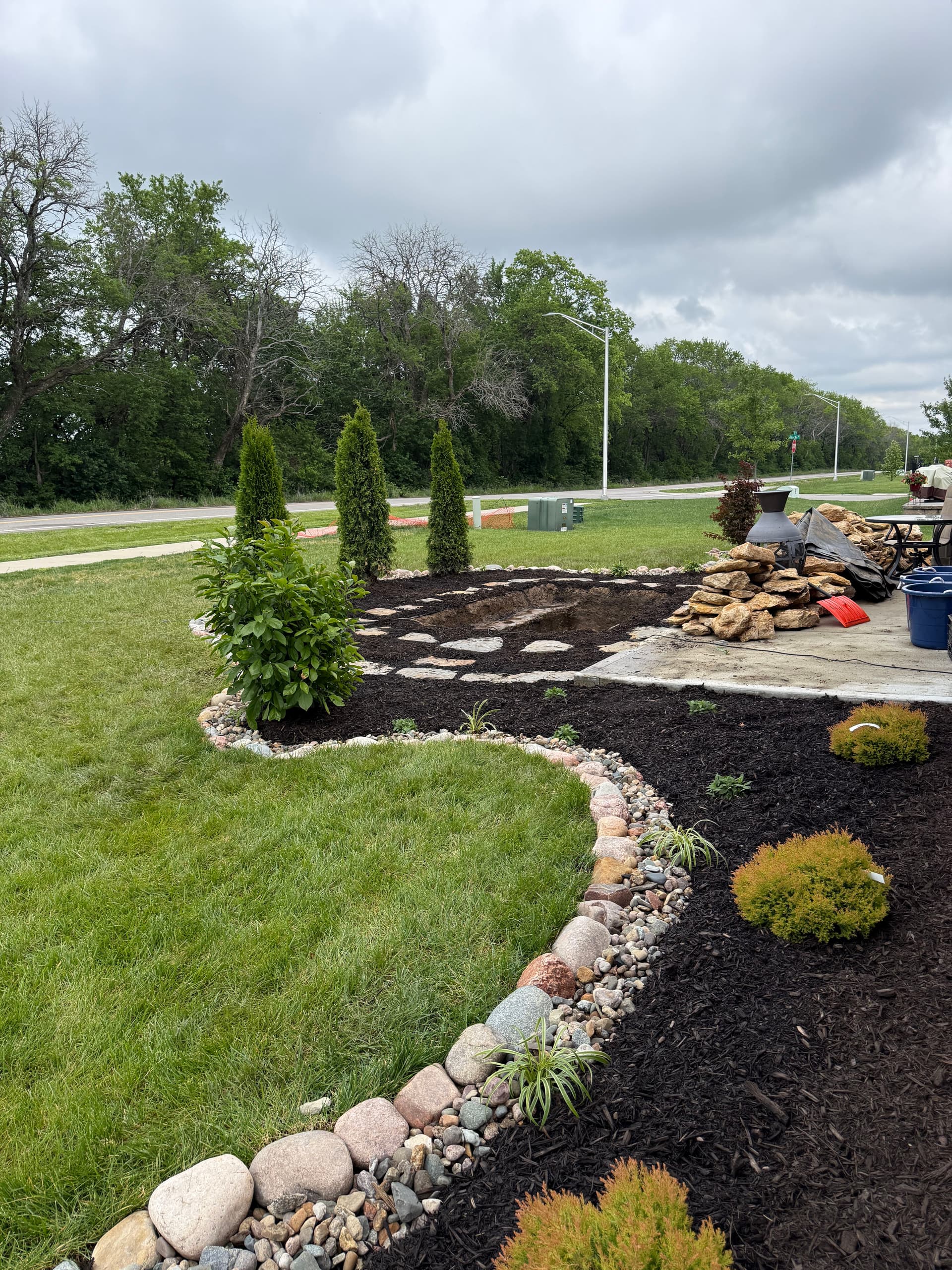
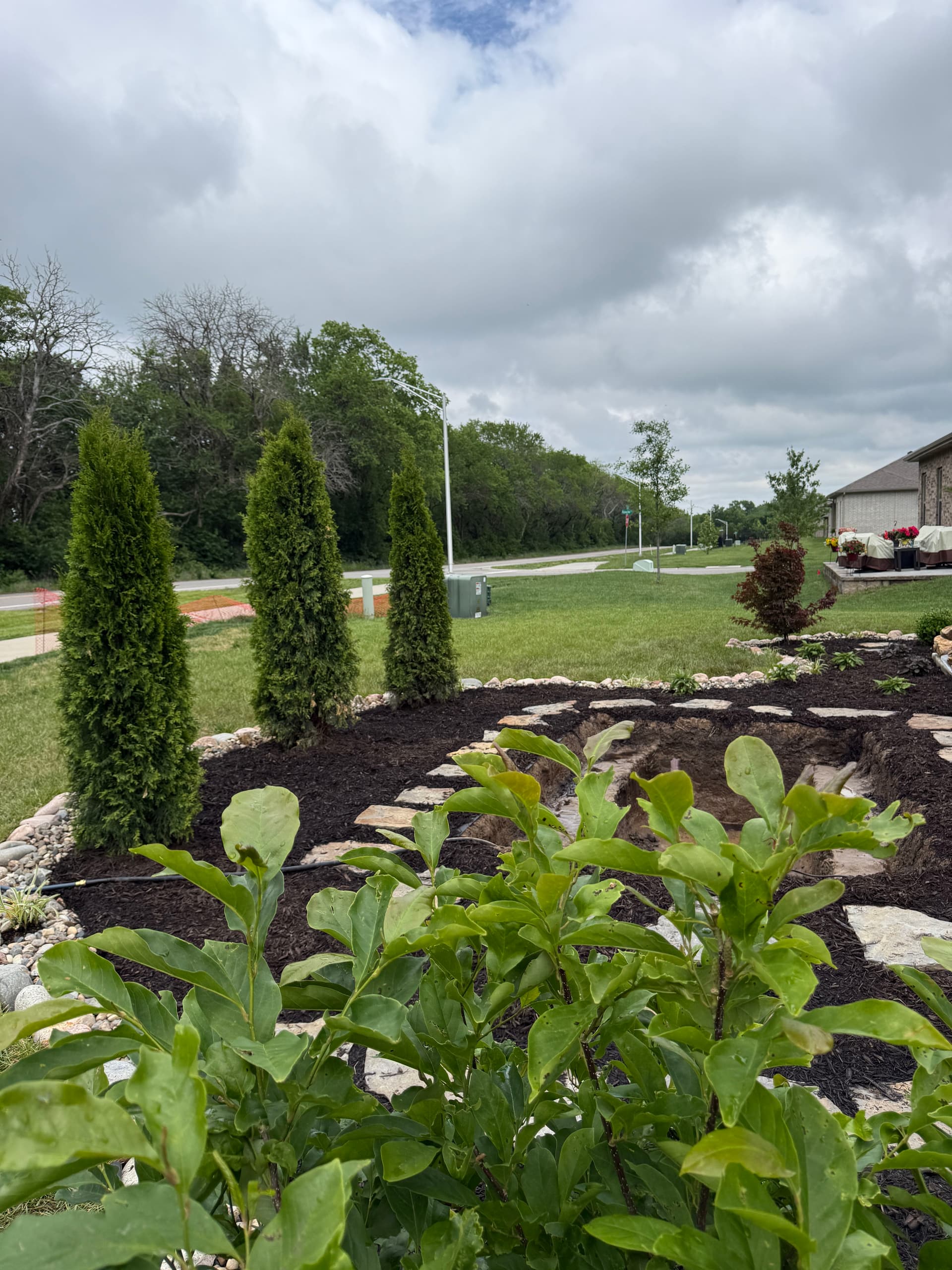
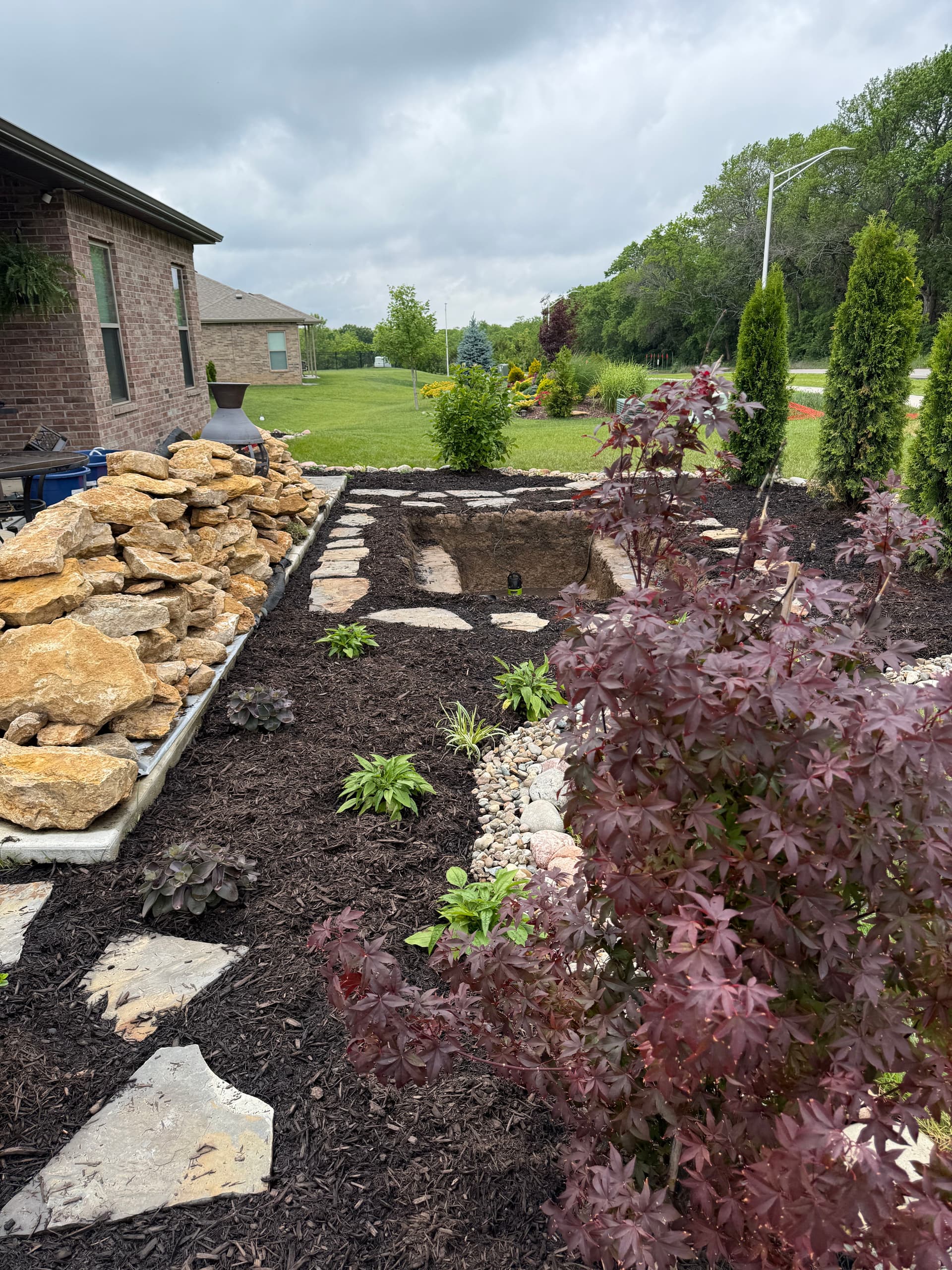
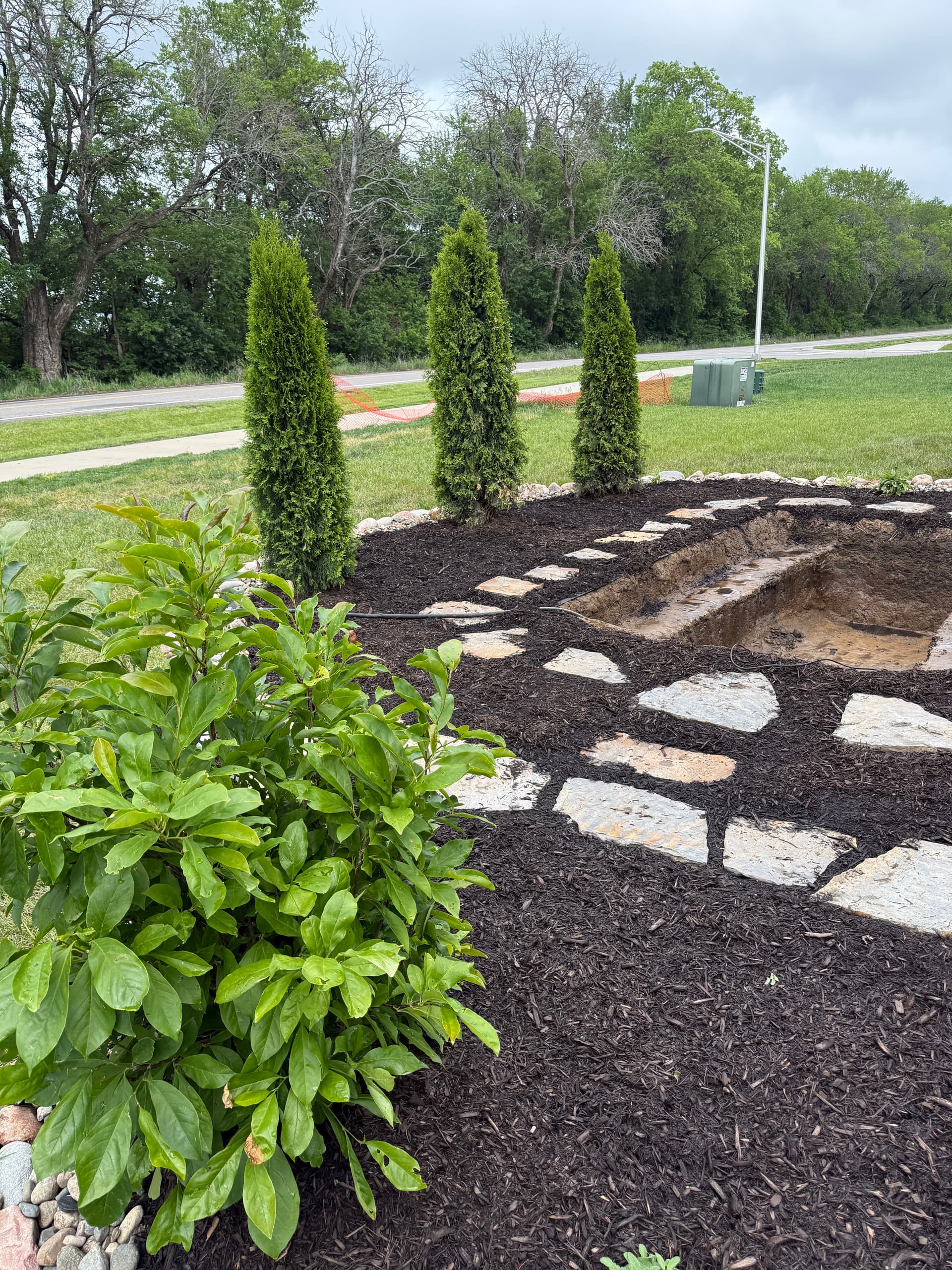
This one is still in progress - and that's exactly the point. Getting the plants in the ground before the pond goes in isn't just a preference, it's the smarter way to do it. Once everything is established around the water feature, the whole space reads as intentional. Cohesive. Like it all belongs together.
Here's what we were working with - a large, sweeping bed that needed real structure. We went with a mix of columnar arborvitae for vertical height, a broadleaf shrub for contrast, a Japanese maple that brings deep burgundy color, and hostas tucked in low to fill the ground layer. Every plant has a job. Nothing is just filler.
The dark mulch is laid clean throughout the entire bed, and the river rock edging along the border keeps the lawn from creeping in. Flat fieldstone pieces are set right around the pond excavation - both functional and sharp looking. The layering of textures here - smooth river rock, rough fieldstone, dark mulch, and lush green foliage - is what makes a landscape feel designed rather than just planted.
What most people don't think about is how much the early decisions matter on a job like this. Plant placement, edging lines, mulch depth - all of it shapes how the finished space will look and how easy it will be to maintain down the road. We plan for the end result from day one, not as an afterthought.
There's still work to come once the pond goes in, but the bones are solid. That's the goal at this stage - get a strong, clean foundation in place so everything that follows has something worth building on.